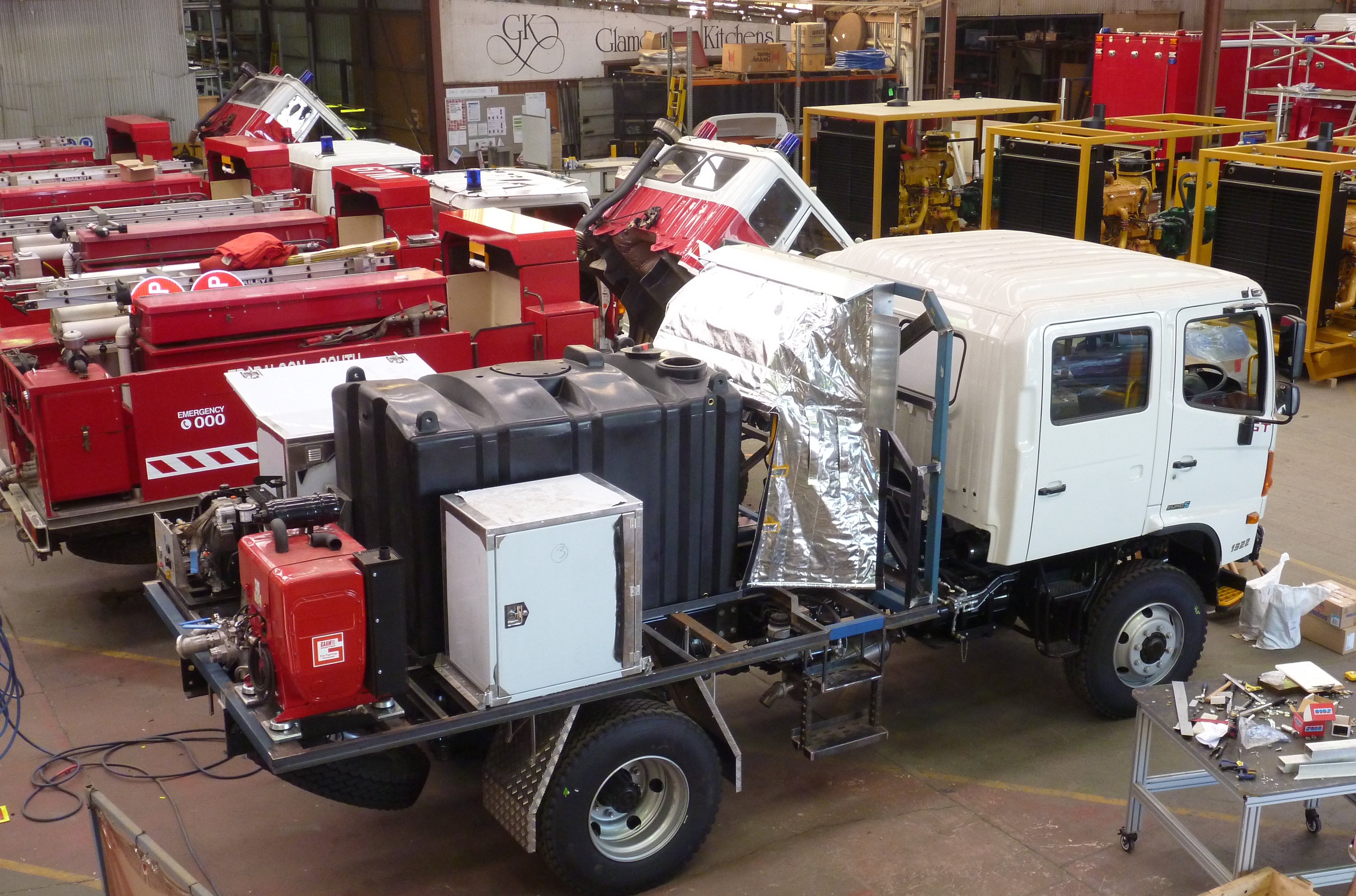
Building a new fire truck is a complex process that can take up to five years from the initial funding announcement to the truck being operational at a fire station.
However, the production time will vary substantially depending on the type of vehicle and whether it is being delivered through an established contract or a new contract.
For example, an ultralight tanker may take 12 to 18 months for a bulk production unit under a new contract, but this reduces to six to 12 months under an existing contract. A more complex vehicle, such as a heavy tanker or pumper, may take four to five years under a new contract where there’s no comparable existing contract benchmark available.
CFA’s Head of Fleet Services Dan Jones takes us through the step-by-step process in detail.
Develop the role statement
After the need for a new vehicle has been identified, representatives from Volunteer Fire Brigades Victoria (VFBV), volunteers, fleet operations, state and regional operations and the Health and Safety team create a working group. This group first develops the role statement which identifies the functional requirement of the vehicle – what the vehicle needs to do.
This process requires extensive stakeholder input, including from volunteers, and can take between six and 12 months.
When the working group has finalised the role statement, it is endorsed and approved by the relevant Deputy Chief Officer and then the Chief Officer.
Develop technical specification
After the role statement has been approved by the Chief Officer, the Fleet Services team develops a technical specification in preparation to go to market. This moves on from what the vehicle needs to do to how it is designed to do it. The technical specification forms the basis for tenderers to submit their pricing and timelines.
It takes about three to six months to draft the technical specification depending on the complexity of the project. It is then reviewed by the working group and then is given to Head of Fleet Services for final approval.
Release to market
To prepare for release to market, a procurement request is created and submitted through CFA’s Procurement Authority Board (PAB) which meets monthly. This includes a recommended procurement approach, generally via a tender to a pre-approved panel. When approved by PAB it’s released to market with a defined timeline for offers to be returned. This period may also include an open supplier briefing to clarify any specific requirements and answer any queries they may have. A tender evaluation plan is also finalised and approved prior to the closure of offers.
Evaluation
After the tender process has closed, the evaluation process begins. A panel assesses each submission against the established criteria to determine overall value for money. It covers commercial and technical compliance, with short-listed offers moving to a detailed assessment. This period may also include seeking clarifications from suppliers.
When the panel has determined a recommended supplier, an outcome report is submitted for relevant endorsements including PAB and finally to the relevant financial delegate for approval. Depending on the estimated value, it may need to be approved by the CFA Board. In accordance with financial delegations, a contract valued between $2 million and $5 million requires CEO approval and above $5 million requires CFA Board approval.
Contract award and orders placed
After the relevant financial delegate has approved the recommendation, we move into contract negotiations, finalise the contract and get the contract executed by both parties. This process can take some time as both legal teams work through the terms and conditions of the contract before CFA and supplier representatives sign and execute the contract.
Engineering drawings
The supplier develops engineering drawings to enable manufacturing to commence. During this period there’s quite a bit of back and forth and engagement between CFA and the manufacturer. For example, for the latest next generation pumper there are more than 2,000 drawings.
Towards the end of this phase, the supplier will start to schedule production of the first vehicle. The supplier may also require access to an example cab chassis for this process. This drawings phase take about six to 12 months.
Manufacturing the first unit
Suppliers start taking delivery of components and sub-assemblies and begin to manufacture unit one. This phase also requires a significant amount of engagement with CFA's engineering project manager to ensure the proposed solutions meet the required engineering, technical and operational requirements, while also identifying and resolving any issues before progressing to the next stage of the build. Up until now, all discussions have been based on general arrangement and detailed drawings, 3D modelling and schematic diagrams.
When CFA receives unit one, engagement with the working group and testing is undertaken. As part of the engagement process, CFA volunteers are given opportunities to provide feedback through targeted engagement with brigades, by taking the vehicle to events such as the State Firefighter Championships and sometimes through roadshows. CFA considers all the feedback and may vary the specifications accordingly.
The testing regime may include an ergonomic assessment, lighting and sound, weight loading, foam system calibration, ambient heat performance and a static tilt test. CFA also carries out pump and reticulation performance testing at one of CFA’s training grounds to ensure everything is working correctly and meets the specification. This collaborative process can take about six months.
The manufacturer won’t start building the second unit until the first one has been signed off by CFA, which is why there can be a significant gap between the delivery of unit one and unit two.
Manufacturing the second and subsequent units
Any manufacturing changes required as a result of unit one testing and engagement are finalised and production of the remaining vehicles begins. The length of this process is dependent on how many vehicles are being produced and the supplier’s capacity to deliver. For example, the 28 new pumpers currently on order are scheduled to be delivered at an average rate of one every three to four weeks.
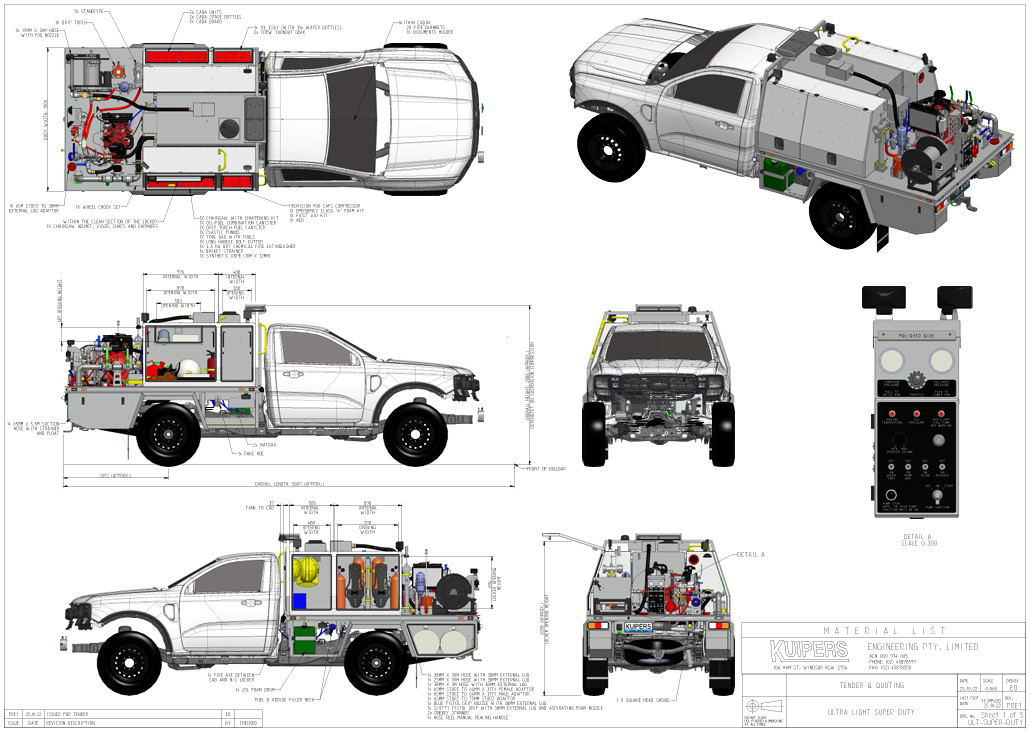 3D modelling drawing
-
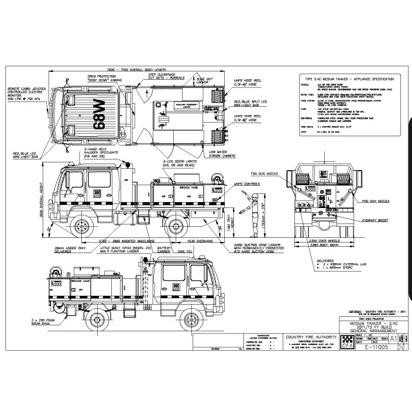 General arrangement drawing
-
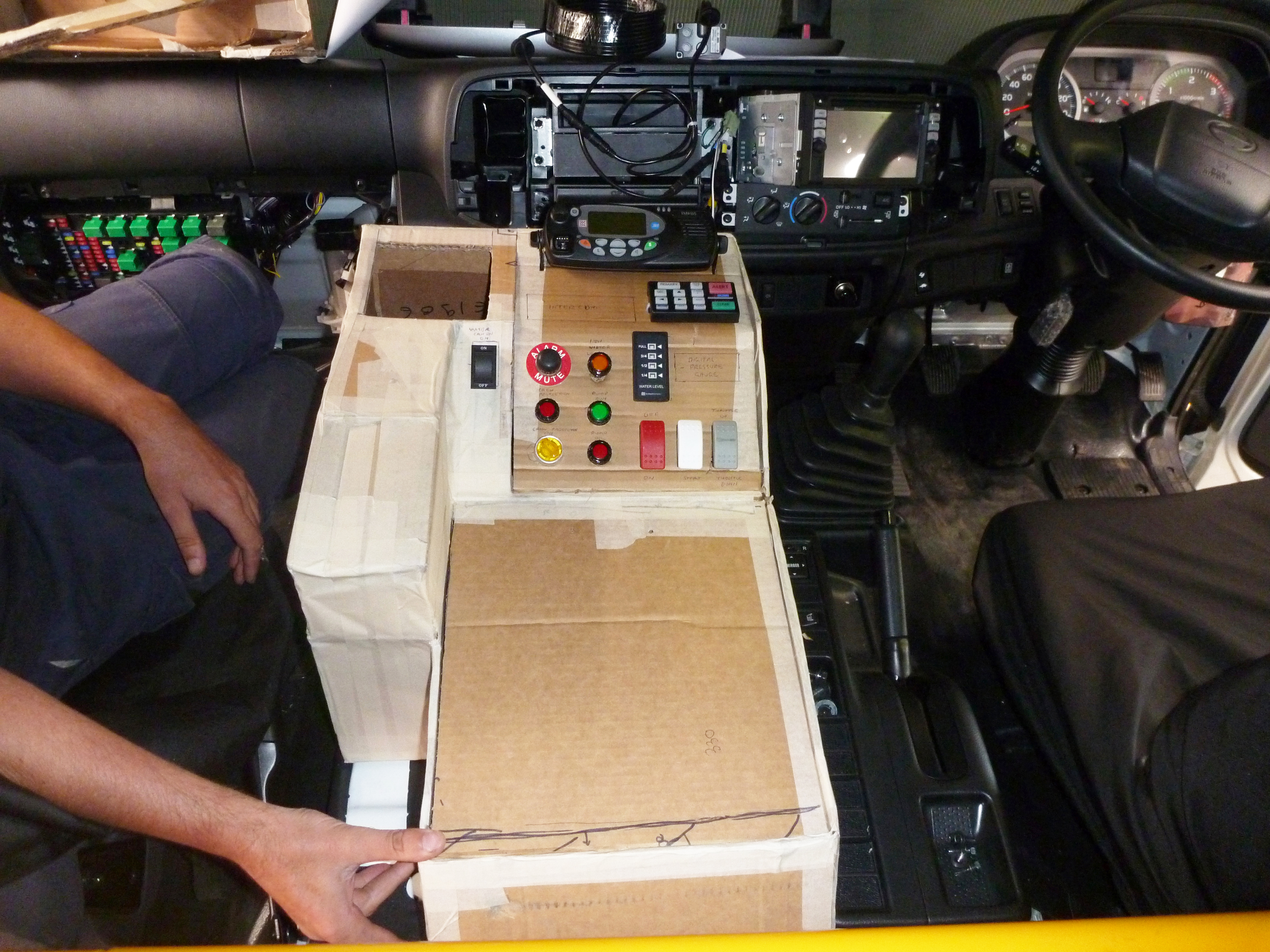 Cardboard mockup of centre console
-
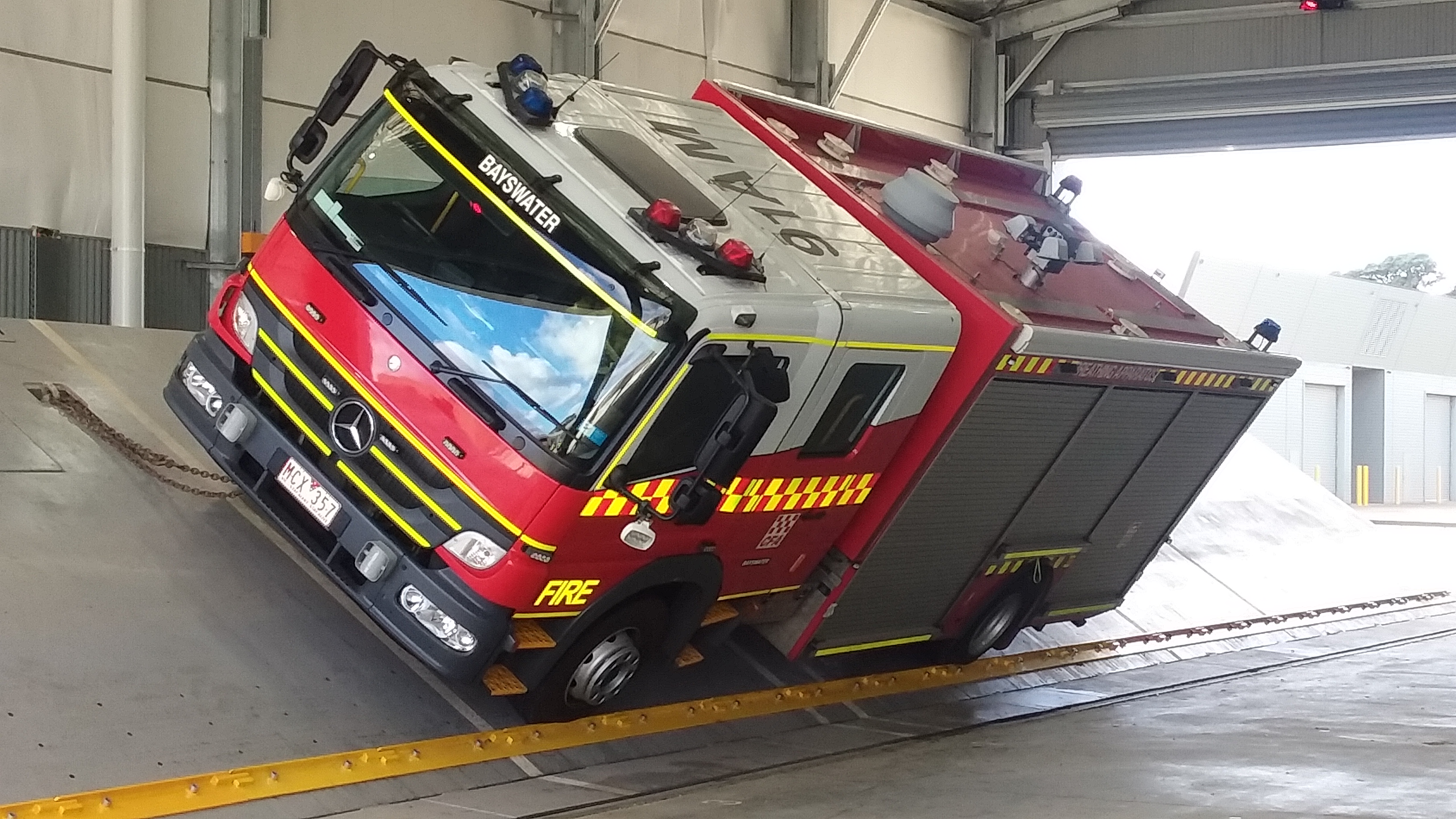 Tilt test to assess stability
-
| Submitted by |
News and Media |