CFA firefighters form part of a Victorian deployment heading to Queensland today to help bring the extreme and devastating fires burning across the state under control.
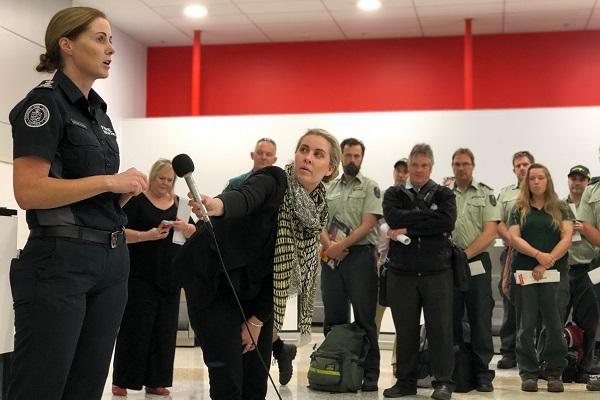
CFA firefighters will join other firefighters and incident management personnel from Forest Fire Management Victoria and SES following a request from Queensland Fire and Emergency Service. Together with three Victorian liaison officer who arrived in Queensland yesterday, they will form a contingent of 88 firefighters from Victoria.
Seeing the crews off at Tullamarine Airport today, CFA Acting Chief Officer Stephanie Rotarangi said the deployment continued a proud and important CFA tradition.
“Victorians know only too well the devastation of bushfires, and it's natural for us to help our interstate colleagues in their time of need, just as they do for us,” she said. “Our firefighters are highly skilled and adaptable, and they’ll make an excellent contribution to firefighting efforts across Queensland despite the extreme conditions they’ll be facing.”
Victorian firefighters will help make up three incident management teams and 15 strike teams. The CFA firefighters come from across metropolitan Melbourne, south-west Victoria and Gippsland.

“The fires in Queensland are having a major impact on communities, we hope that our small contribution will help reduce these impacts as soon as possible and let people get back to their everyday lives,” Dr Rotarangi said.
“Victoria remains well equipped to deal with any bushfires at home while these crews are helping in Queensland, but we look forward to the safe return of our firefighters from Queensland next week as we head into summer. The conditions up there are a timely reminder for Victorians to make sure they are ready for the bushfire season.”
She said the Bureau of Meteorology’s latest outlook, released today, shows most of Australia is likely to see a hotter than normal summer period, while Western Australia, Queensland and the Top End of the Northern Territory look set to be drier than average.
Victorians know only too well the devastation of bushfires, and it is natural for us to help our interstate colleagues in their time of need, just as they do for us.
In Victoria, which has experienced one of the top 10 driest springs since records began in 1900, many parts are still extremely dry despite recent rain.
“Some areas of the state, particularly in Gippsland, are extremely dry and will need many weeks of above-average rain before drought-stressed plants start to recover,” Dr Rotarangi said.
“While the recent rain has made fuel less flammable in the short term, the current weather outlook indicates a return to dry conditions and elevated fire risk.
“CFA and its partner agencies are well prepared for what is predicted to be a long and severe fire season, but as always it’s a partnership with the community and we need residents to do their part.
“People who live in areas at risk of bushfire should prepare their properties and make a plan for their household on what to do in the event of a day of Severe, Extreme and Code Red Fire Danger Ratings. The CFA website (www.cfa.vic.gov.au) has excellent information to help people do that.”
Author: CFA Media